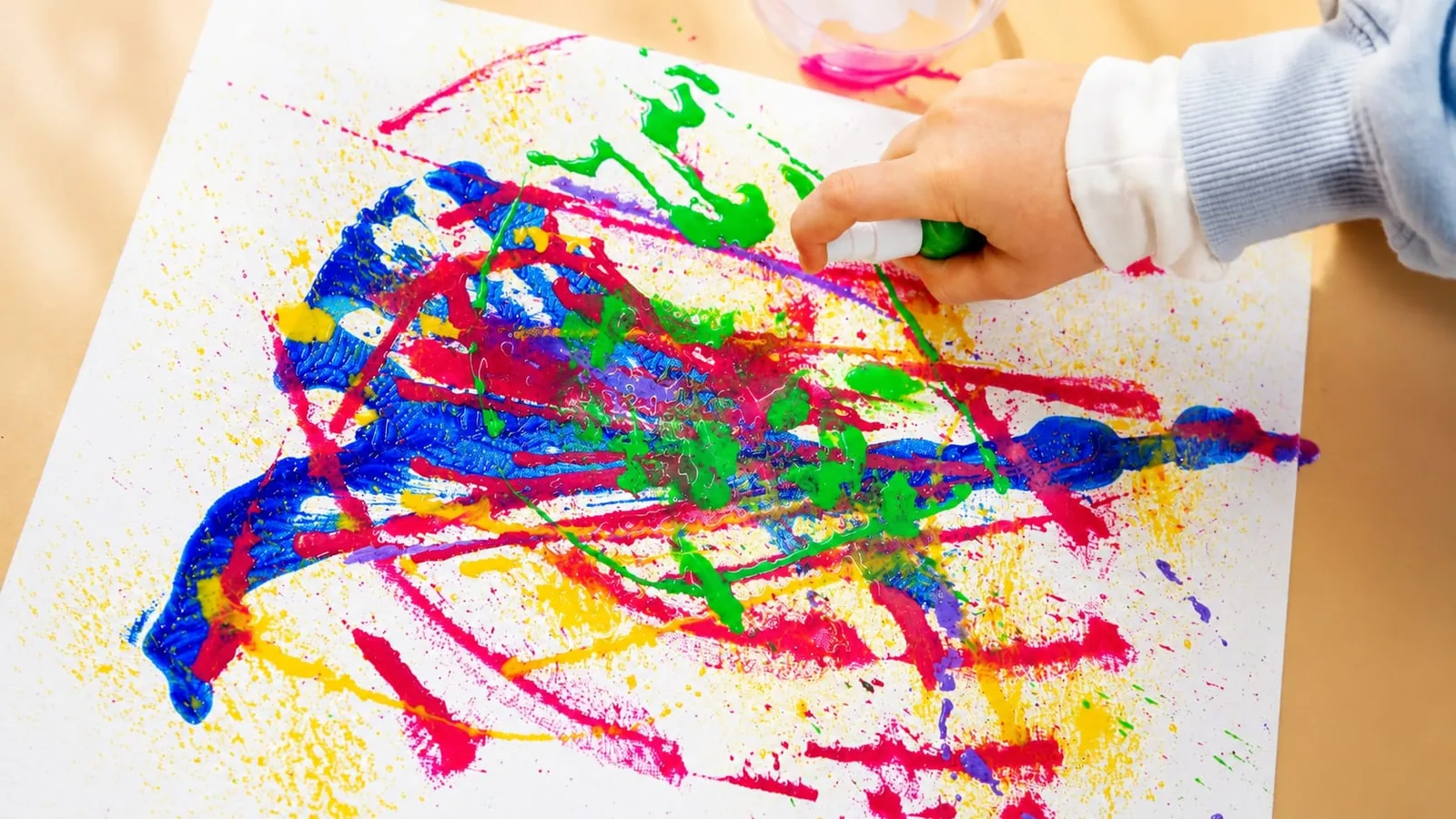
Parents often have practical questions before the first session:
- Will my child have to talk about their feelings?
- What if they don't know what to make?
- What if they don't want to participate?
- And what actually happens in an art therapy room?
The first session isn't about getting everything “right” or immediately talking about difficult things. It is primarily about helping the child become familiar with the space, the therapist and the idea of therapy.
Before your child's first session
When I work with children, I usually begin by meeting with the parent or caregiver.
This gives us an opportunity to talk without asking the child to sit through a long conversation about them. We can discuss what has brought you to therapy, your child's strengths and interests, what has been happening recently, and anything important for me to understand about their development, relationships, school and family life.
When parents are comfortable with it, I also like to invite some art-making into this first meeting. There is no need to be artistic or know what to make. It offers parents a small experience of what it can feel like to use art within a therapeutic space, rather than only hearing me explain it.
Art is an important part of the language I use in therapy, and I value being able to share some of that language with parents too.
The relationship with parents and caregivers is a meaningful part of my work with children, particularly with younger children. They know their child in ways that I cannot, and staying connected throughout the therapeutic process can help us build a fuller understanding of what the child may need.
The initial meeting is therefore not only about gathering information. It is the beginning of our work together.
Arriving at the studio
For many children, the first thing they notice isn't the therapist.
It's the materials.
Paint, clay, paper, drawing materials, collage supplies and objects for building and creating can naturally invite curiosity.
I work with an Open Studio and process-based approach. This means there isn't a single activity that every child is expected to complete.
In the first sessions I may offer more guidance while the child becomes familiar with the studio. As they become more comfortable, there is increasing space for them to choose materials, follow their interests and decide what they would like to explore.
Does my child have to talk?
No.
Conversation is part of art therapy, but it isn't the only way we communicate.
Some children talk while they make art. Others become very focused on what they are creating and speak very little. Some move between making, talking, playing and exploring the room.
All of these can be part of the therapeutic process.
There is no expectation that a child will arrive at their first session ready to explain what is troubling them.
Trust takes time.
What if my child says, “I don't know what to make”?
That's completely okay.
A child doesn't need to arrive with an idea, and art therapy isn't a test of creativity.
We can look at materials together, experiment, start with something simple or sometimes just spend time becoming comfortable in the space.
There is also no requirement to be “good at art.”
A child might spend a session painting, constructing something from cardboard, working with clay, drawing, cutting and sticking, or moving between several materials.
The finished object is not the goal.
What happens during the process can be just as important.
What am I looking for in the first few sessions?
I'm not trying to analyse every picture your child makes.
I'm getting to know them.
I notice what they are drawn to, how they approach the materials, what helps them feel comfortable, what frustrates or excites them, how they communicate and how we begin to build a relationship together.
Every child enters therapy differently.
Some feel at home in the studio very quickly. Others need more time to observe, test the space and decide whether it feels safe enough to engage.
Both are okay.
Will parents know what happens in the sessions?
Parents are an important part of therapeutic work with children, but children also need to know that therapy is a space where they can develop their own relationship with the therapist.
I therefore aim to find a thoughtful balance between maintaining the child's privacy and keeping parents appropriately involved.
Parent check-ins can help us share relevant observations, understand what is happening outside the therapy room and think together about how to support the child.
Especially with younger children, I see this ongoing relationship with parents as an important part of the therapeutic process rather than something separate from the child's therapy.
The first session is just a beginning
A successful first session doesn't necessarily mean that your child created something meaningful, talked about their feelings or left saying they loved therapy.
Sometimes success is much simpler.
They came into a new space.
They explored.
They met someone new.
And perhaps they began to feel that this could be a place where they don't have to get everything right.
At Enso Art Therapy in Glen Huntly, Melbourne, I work with children and adolescents in a dedicated creative space, using art-making and conversation in a way that is responsive to each child. You can learn more about art therapy for children and about Roni.
If you're considering art therapy for your child and would like to understand more about how the process works, you're welcome to get in touch before deciding whether to begin.