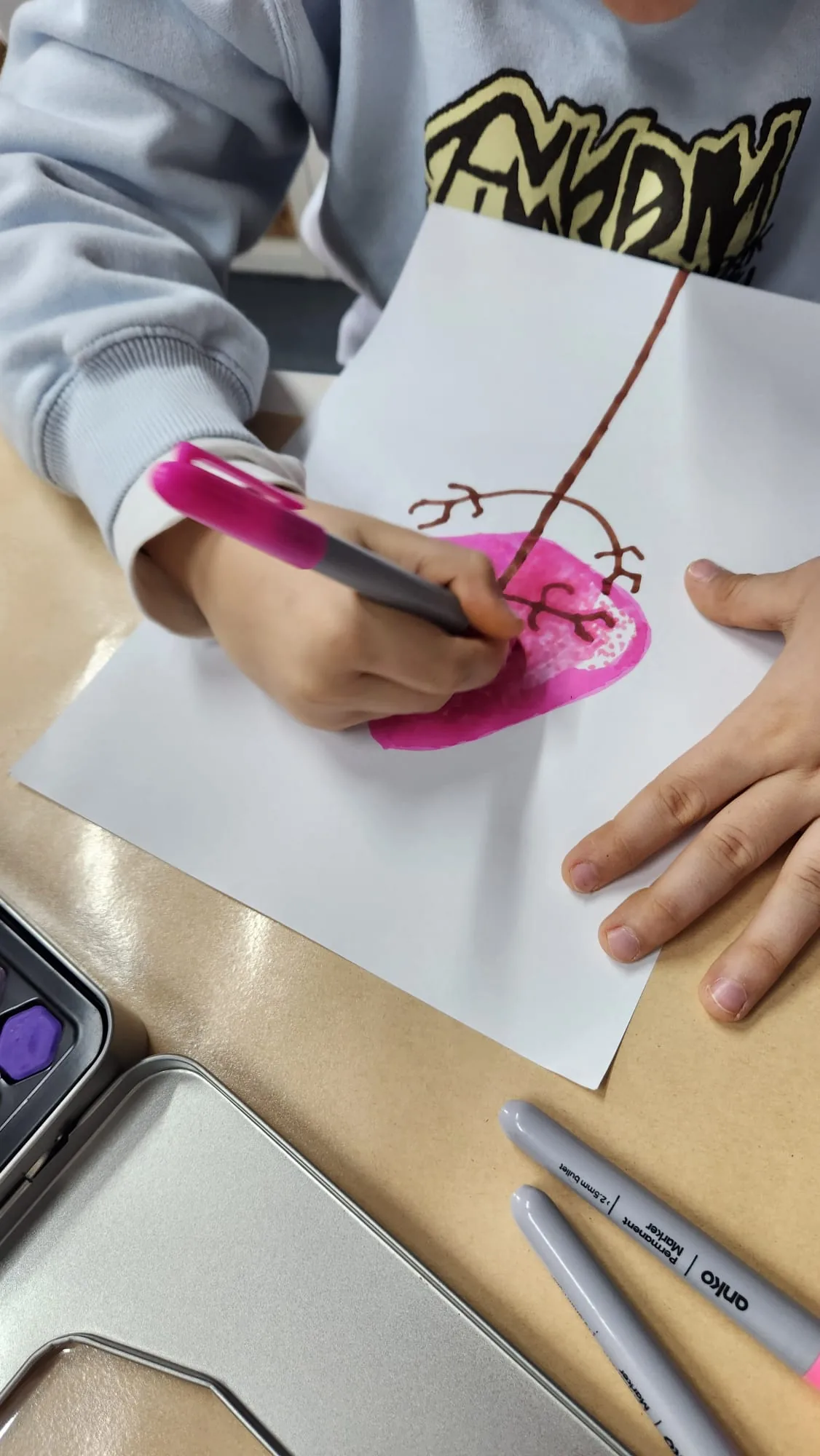
What art therapy is
Art therapy brings together creative work and therapeutic conversation. For children it offers another language, one made of colour, materials, images and play, for experiences that are still too big, too new or too tangled for words.
A child does not need to be good at art, and there is no finished artwork to achieve. The therapeutic value sits in the process of choosing, making, noticing and sharing.
What happens in a session
Settling in
Sessions usually begin gently, with time to arrive and look at what is available. Some children start making straight away, others prefer to talk or explore the space first.
Creating and talking
The work moves between making and conversation at the child's own pace. The artwork is not interpreted from the outside, instead we become curious about it together. This responsive way of working is described further in the Open Studio approach.
Working alongside parents
Parents and caregivers are part of the picture. Regular check-ins help connect what is happening in sessions with life at home and school, while protecting the child's privacy in the therapy room.
Signs art therapy might help
Families often get in touch when a child is anxious, withdrawn, easily overwhelmed, is navigating change such as a move or separation, or is struggling socially at school. Children who find talking therapy difficult, including many autistic and neurodivergent children, often find a creative approach easier to settle into.
Practical things to know
Sessions run for 50 minutes at the Glen Huntly studio, near Caulfield, and are also available online. You can read more on art therapy for children, see current fees and services, or find out how sessions can be funded through NDIS.